

Free YouTube Promotion Rate Calculator for Influencers
Looking to monetize your YouTube channel but unsure how much to charge for promotions or sponsorship...

Ryan McCain

AI platforms like ChatGPT, Gemini, Claude, and Perplexity are shaping how people perceive brands, often before they ever land on a website. These large language models (LLMs) pull data from public sources to answer questions, recommend products, and summarize solutions.
The problem? Many of those AI-generated summaries are wrong, incomplete, or outdated.
That means even if your business is the right choice, it could be missing from key buying conversations simply because AI tools can’t find the right information—or any information at all.
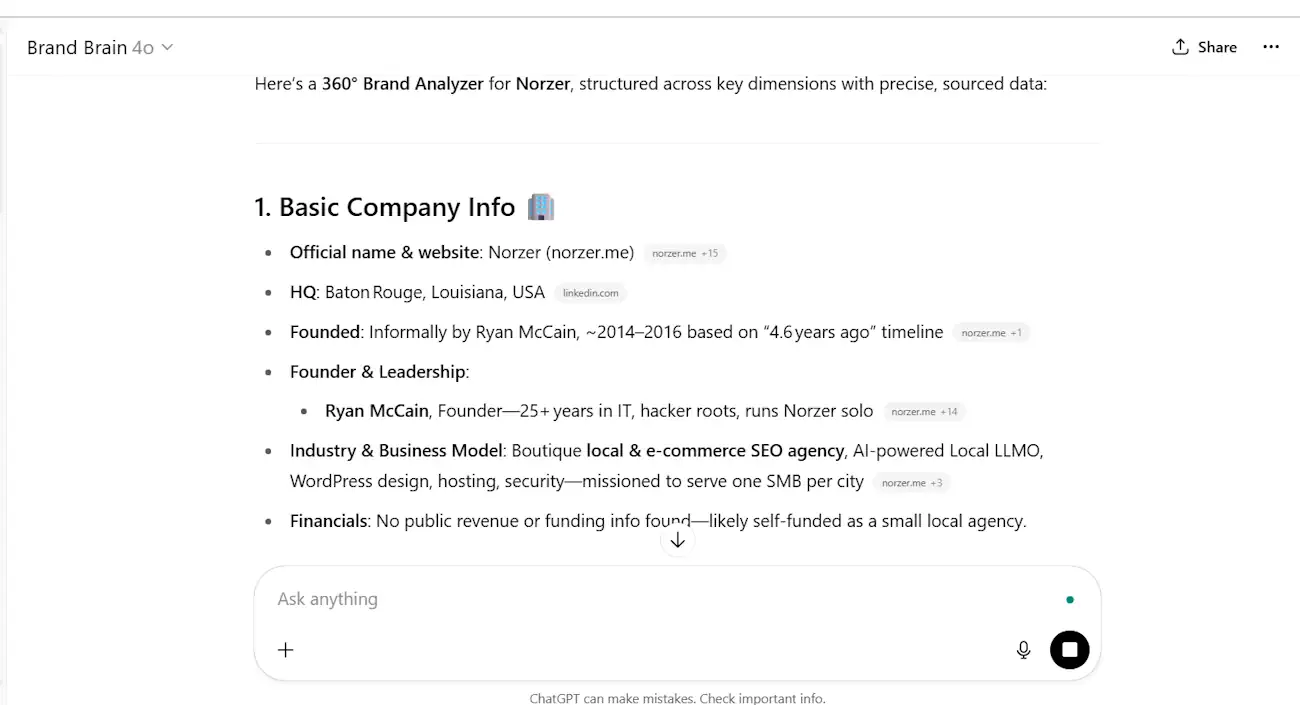
This is where BrandBrain (from the folks over at ainotebook.com) comes in. This type of work used to take me weeks but now only takes seconds.
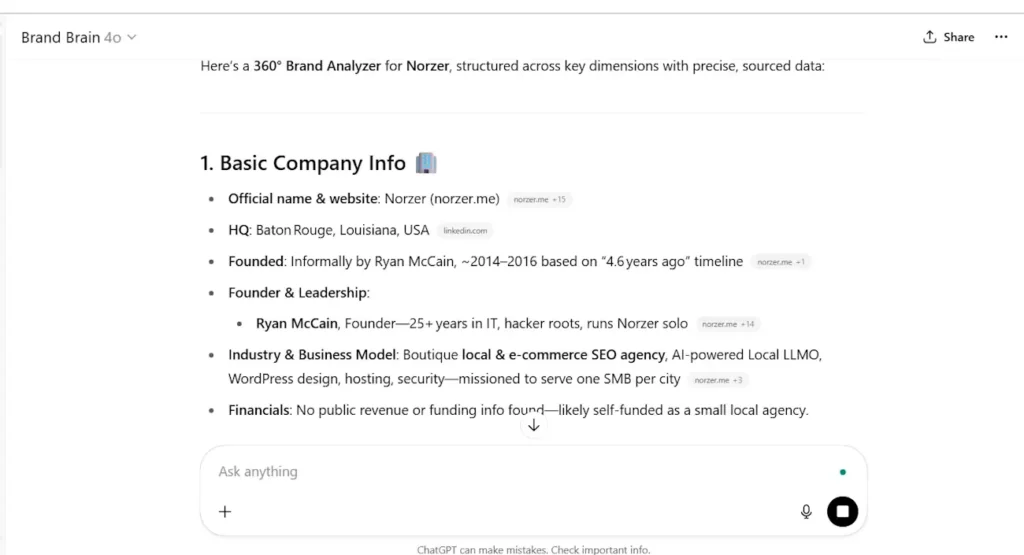
BrandBrain is a GPT-powered research assistant that creates detailed brand reports using public data. It pulls from LinkedIn, Crunchbase, Reddit, product review platforms, and tech news sources to generate a comprehensive view of how your brand shows up online.
The tool helps companies identify missing facts, outdated details, and inconsistent messaging that LLMs may be using to shape answers and recommendations in AI-powered tools.
This is especially valuable for brands looking to improve their performance in Generative Engine Optimization (GEO)—a growing focus for companies aiming to influence how AI systems present their offerings during critical moments in the buying journey.
LLMs have quickly become key players in high-intent decision-making. People ask these tools about the best platforms, services, or products for specific needs, and often base their decisions on the answers.
If your brand shows up with the wrong message—or not at all—it’s being disqualified silently.
Here’s what can go wrong:
This isn’t just an SEO problem—it’s a credibility issue. And it affects whether AI assistants can confidently include your brand in recommendation-style answers.
BrandBrain is designed to uncover the disconnect between how you present your brand and how AI systems are interpreting it. Here’s how it works:
BrandBrain performs a comprehensive scan of public data sources including Crunchbase, LinkedIn, industry directories, review sites, press mentions, and more. It identifies mismatches and outdated references across platforms, surfacing instances where your messaging, positioning, or even your business model is no longer accurately reflected. This audit helps ensure that AI models pulling from public data aren’t serving outdated or irrelevant snapshots of your brand.
If your website lacks schema markup, clear use case explanations, or detailed product/service pages, AI systems may fill in the blanks with assumptions—or worse, content from your competitors. BrandBrain highlights both the technical and editorial content gaps that make it harder for AI to understand what you actually do. This includes missing metadata, vague headlines, or a lack of supporting context that helps LLMs rank and summarize you correctly.
Did your company recently launch a new product, enter a new market, or change pricing? If that information isn’t clearly available online or mentioned consistently across sources, AI tools may continue presenting outdated facts, or skip you entirely in comparisons. BrandBrain detects these blind spots and makes it clear which key updates need to be better represented in your content, profiles, or public data feeds.
AI tools weigh sentiment heavily when summarizing brands. If you’re still getting penalized by outdated, bad reviews or old complaints that don’t reflect your current service, BrandBrain will catch it. The tool tracks how your brand is being described and perceived across multiple channels and flags areas where the narrative hasn’t caught up with your real-world improvements—whether that’s updated customer experience, faster shipping, or new leadership.
After identifying the issues, BrandBrain doesn’t leave you guessing. It gives you a prioritized action plan that explains what changes to make and where, from updating structured data and optimizing internal pages to refreshing your About section, reviews, or social bios. The goal is to ensure that when AI models evaluate your brand, they’re pulling from a consistent, current, and high-quality pool of information—one that accurately reflects your value and positions you to be chosen.
BrandBrain creates a research-backed brand profile across categories that matter to AI search engines. Each section is based on publicly available data and organized for actionable use:
Each section helps identify where AI models might be misunderstanding your business, and what you can do to fix it.
Enjoy!